Side By Side Project · The Irene M. Hunt School · August 2026
Reframing What It Means to be Bad
The Side By Side Project brought in Bad Art Club to do a back-to-school training for their 38-person staff at The Hunt School, a nonprofit, nonpublic school that provides students (K-12) with an individualized education that addresses emotional and behavioral challenges. Their goal was to integrate new staff members, deepen existing bonds, and adopt new tools to support their students in the classroom.
- Staff members:38
- Workshop length:2 hrs
- Funding:Title IV
- Format:Onsite
The Challenge
Many of the Hunt School students are either in foster care or have been expelled from public school, carrying an internalized shame around being “bad” that compounds the learning challenges they already face. The Hunt School staff, behavioral therapists, clinicians, supervisors, teachers and teacher's aids, some with over 40 years of tenure and others brand new to the team, needed tools to meet that shame with something other than more pressure to perform.
The Bad Art Club Approach
A common response to internalized shame is perfectionism: falling short of impossibly high standards causes students to shut down or lash out. Art-making is a powerful tool for emotional expression and regulation, but only when it's about the process, not the outcome. Making intentionally “bad” art disarms the inner critic and lets people engage without pressure to perform, an especially critical form of agency for students whose lives have so often been determined by other people.
Another key piece of the Bad Art Club methodology is the role of the witness. When we witness each other's expression with loving presence, free of judgment and full of curiosity, it anchors belonging and safety, the conditions we need to heal, learn and evolve. This is why we designed a Bad Art Club workshop specifically for a staff supporting trauma-impacted youth: an embodied experience of the methodology, so its impact would naturally carry into their classrooms.
The Program: Connect, Create, Celebrate
The partnership began when a Hunt School clinician who'd attended a Bad Art Club workshop recommended us to the Side By Side Project. We met with SEL Program Manager, Chloe Lechuga, to understand the school's culture and objectives, then collaborated with her to design a two-hour training that could double as team-building and skills-building: a three-part arc of Connect, Create and Celebrate.
Connect
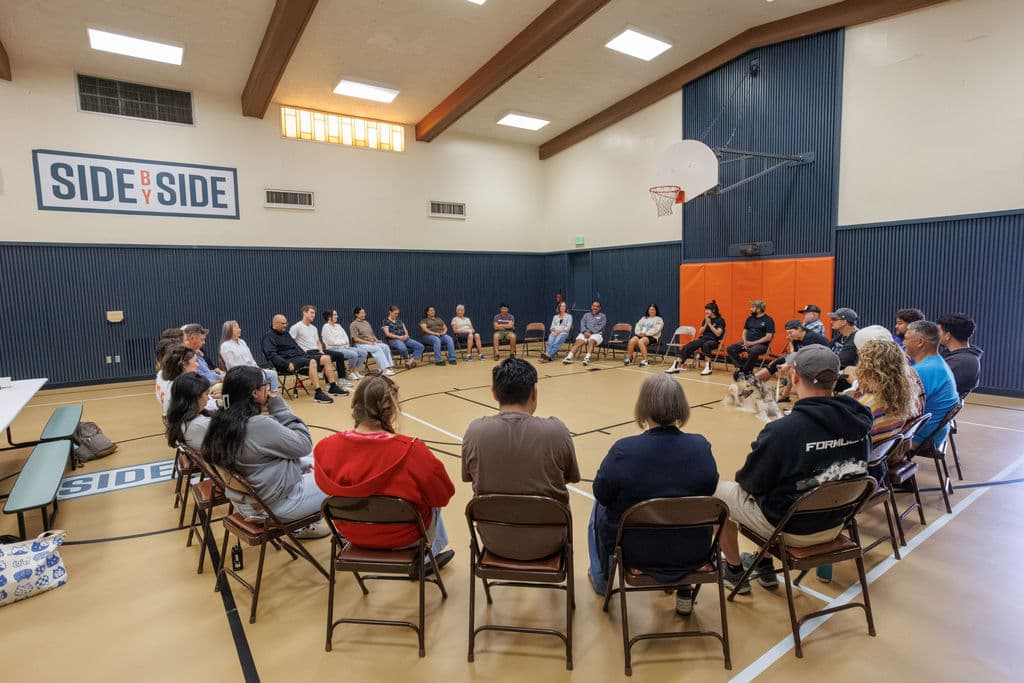
- We set the container. We began with a few synchronized deep breaths and brought attention to the raw sensations and qualities of the present moment. This wasn't framed as a meditation intentionally, in order to keep it as low-pressure and natural as possible. Then we shared the three agreements: Be here, be clear, be sincere. Jules and the team introduced themselves and shared about the intention of Bad Art Club.
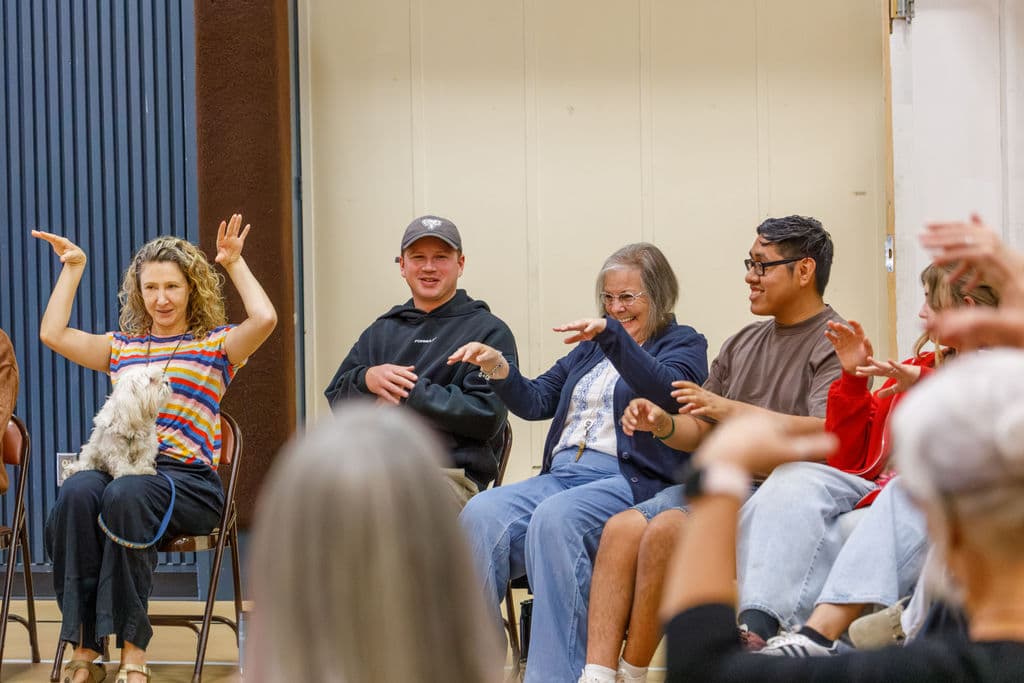
- We got to know who was in the room. Each staff member shared their name, pronouns, and a word they like for how it feels to say, not necessarily what it means. They said the word with the tone and movement that it evokes in them, and the rest of the group mirrored it back. This gently opened imagination, got people out of their thinking minds and into the felt sense of the body, and created a sense of safety and belonging through the mirroring aspect. It also gently opened a pathway for silliness and vulnerability, without being too much.
- We got out of our heads and into our bodies. Staff members moved around the room, walking to the beat of a dance song, and played a game of collective freeze dance, which meant they needed to widen their gaze and track each other's movements. This movement piece was framed as a way for us to get out of our minds that have so many ideas why not to make art, and into our bodies that naturally want to express and know how.
Create
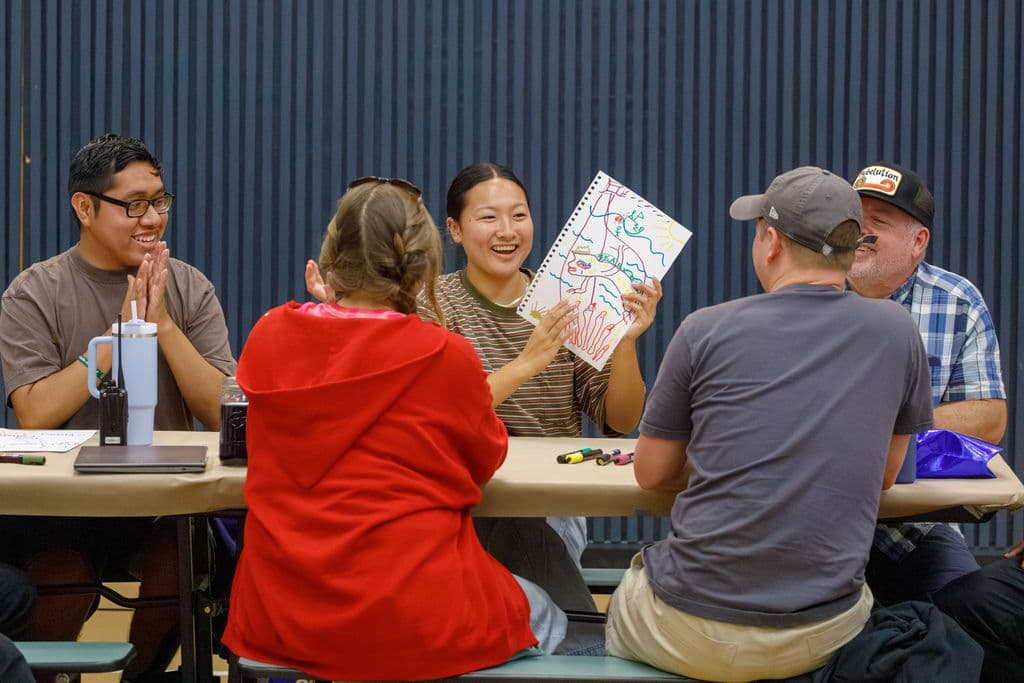
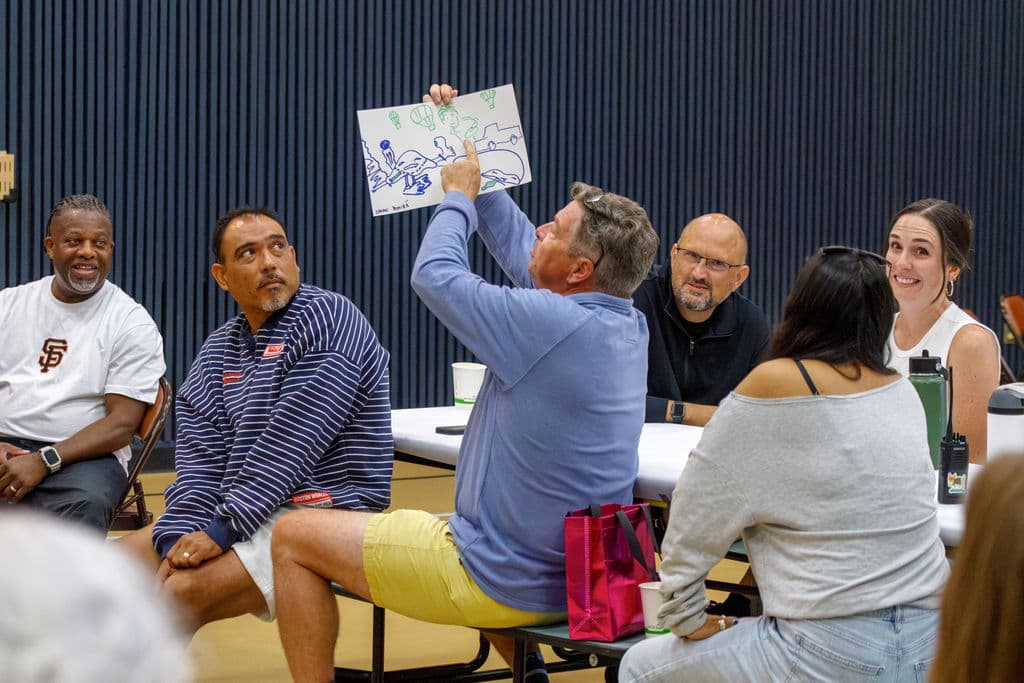
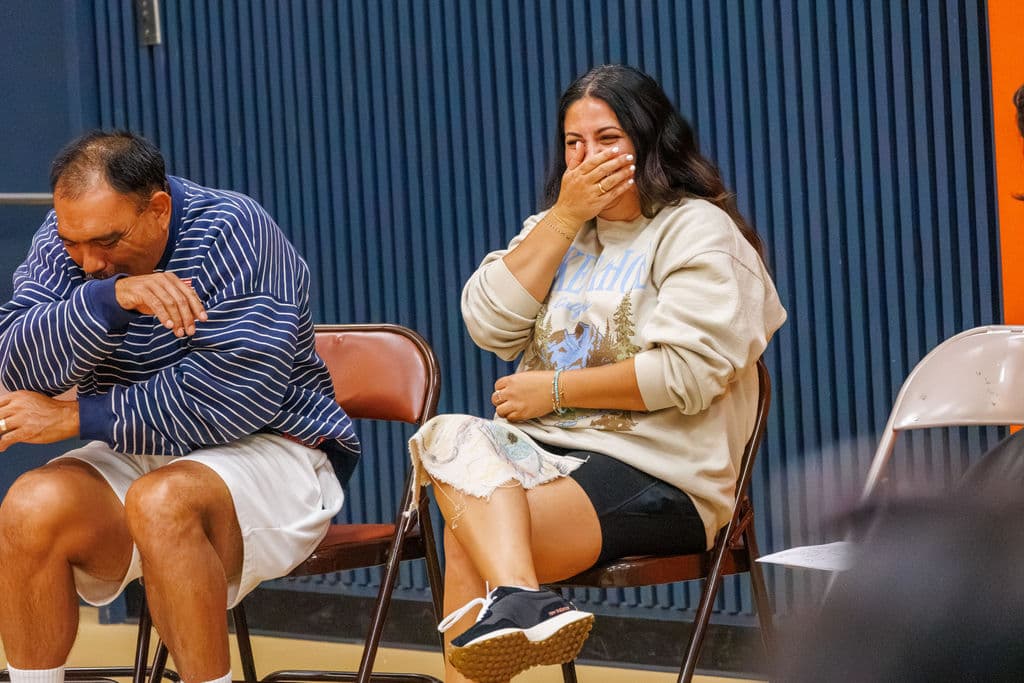
- We anchored belonging. In groups of 3-5, staff members contributed to a drawing and a storyline about an underwater superhero. This served as a playful way for the subconscious to be expressed, for individuals to express their raw ideas and to be affirmed by their colleagues. It was a playful and lightweight opportunity for easeful collaboration. Each group shared about their character with the larger group, inciting laughter and increasing safety and comfort. This is an activity that can be adapted to any age group.
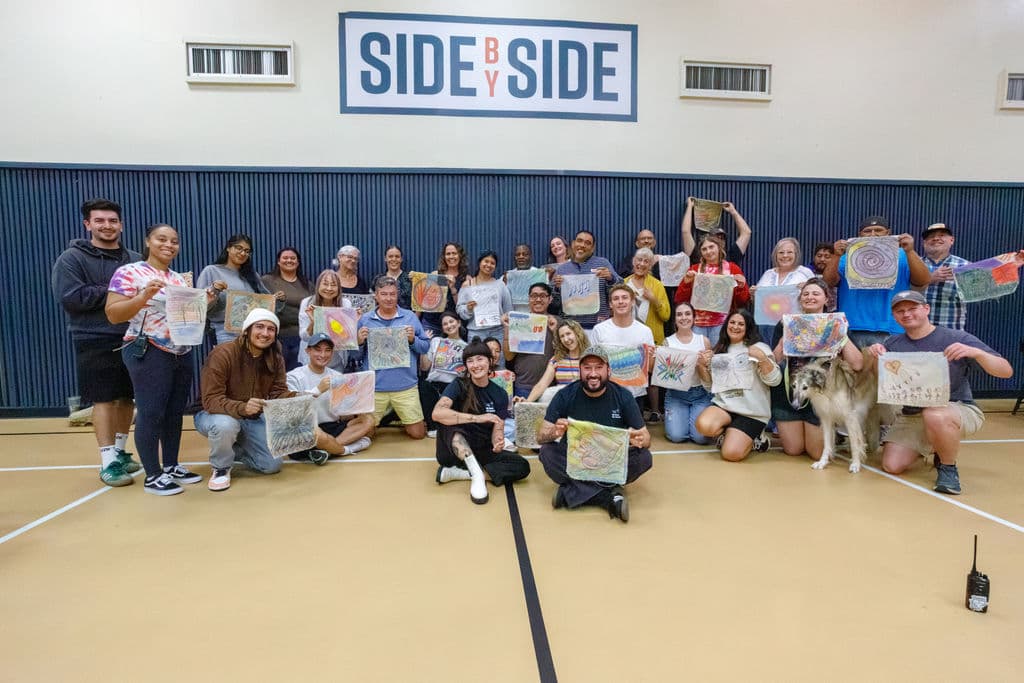
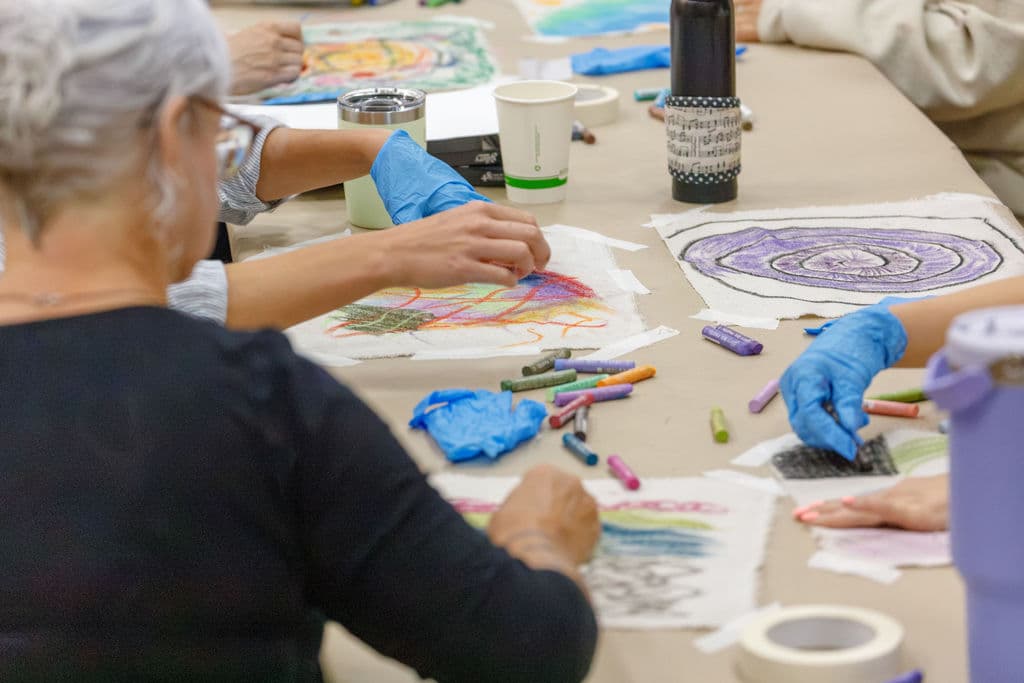
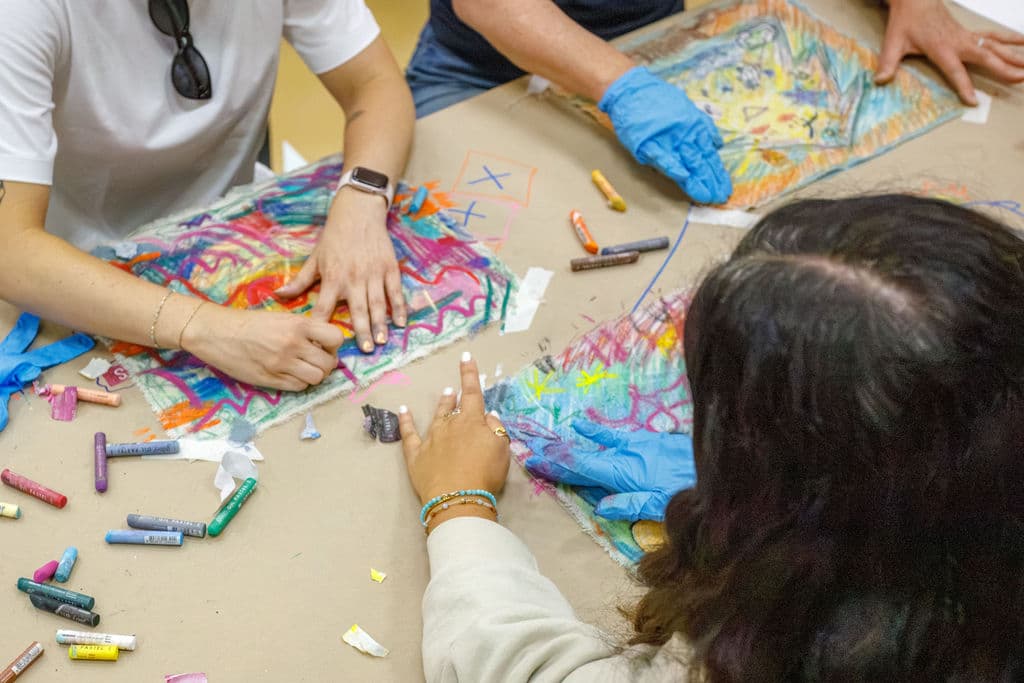
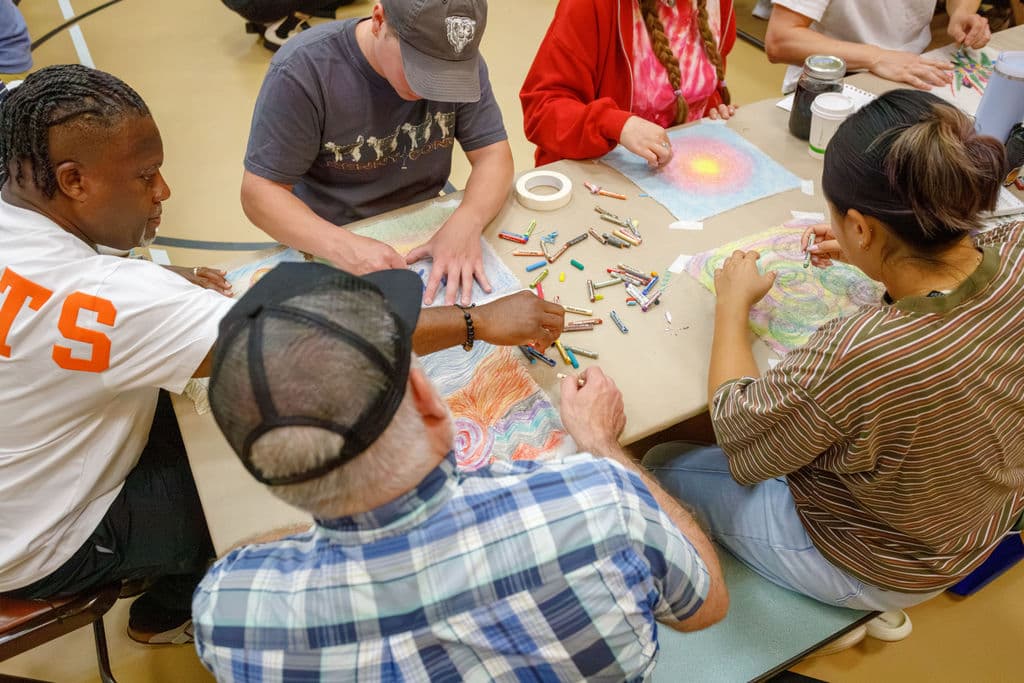
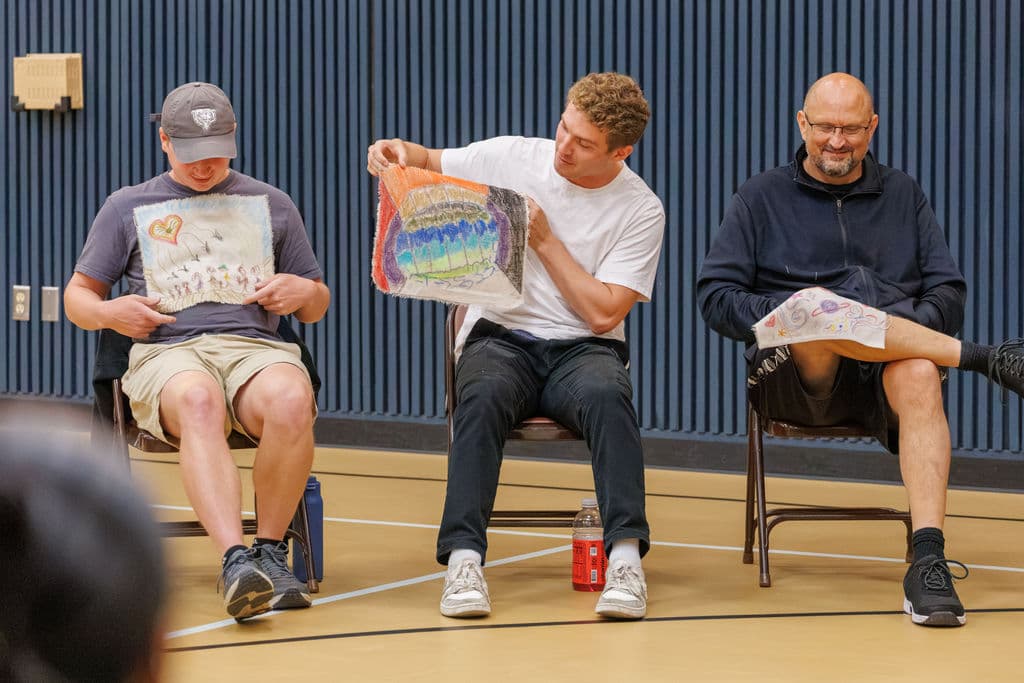
- We invited individual expression. Each person colored an “inner self-portrait” with pastels on a torn piece of drop cloth, making marks based on how they feel inside, not how they look. An intentional playlist supported the creative process. They were encouraged to embrace mistakes (like breaking pastels) and do the opposite of what they'd normally do.
Celebrate
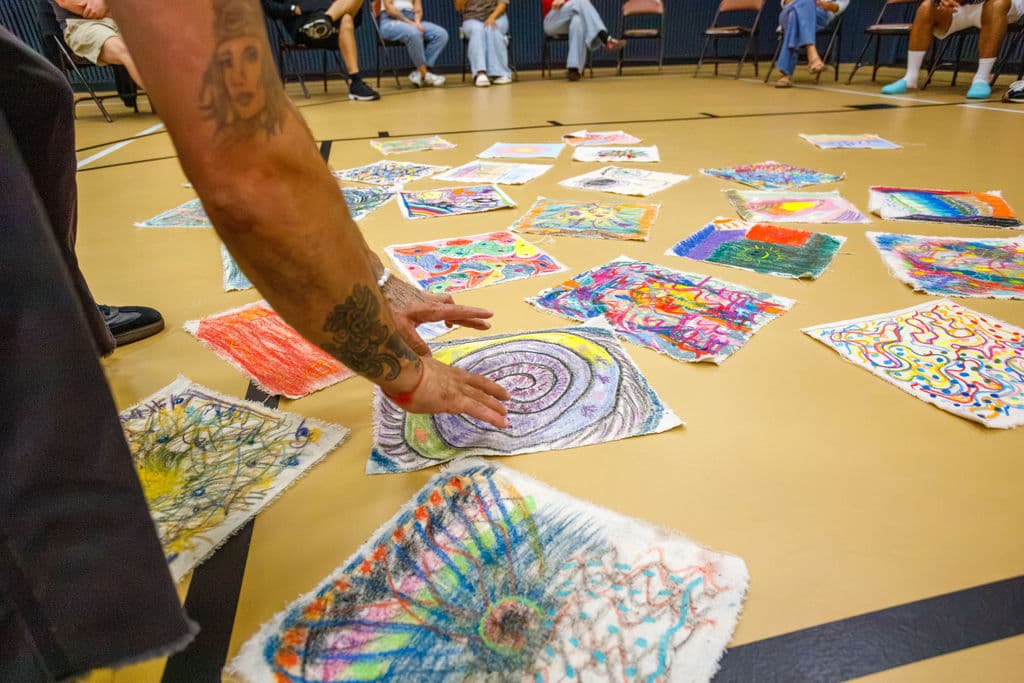
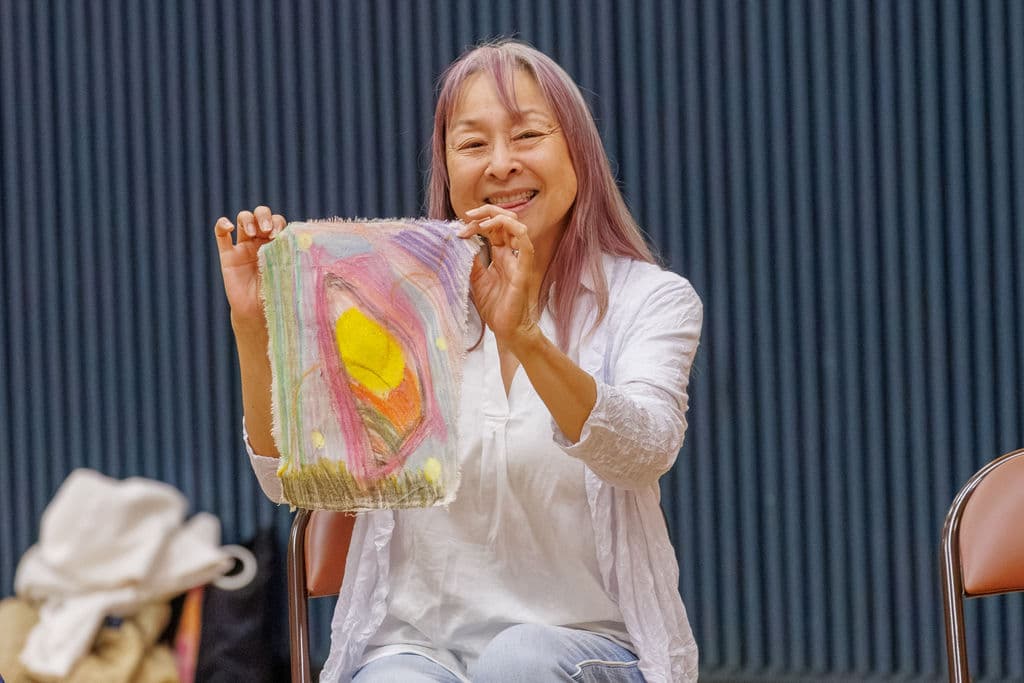
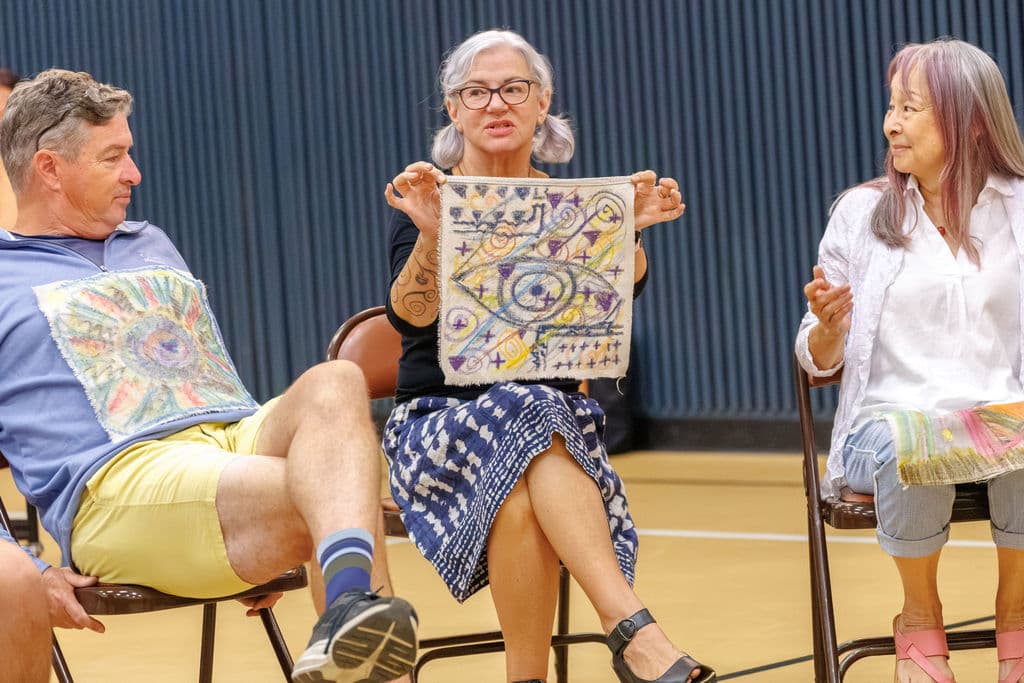
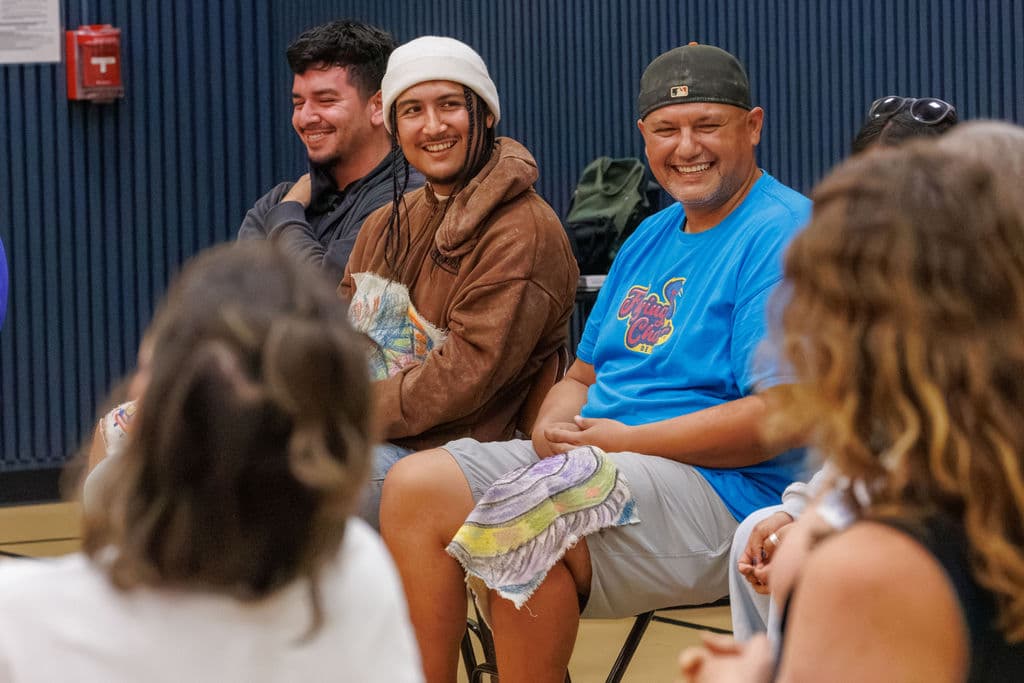
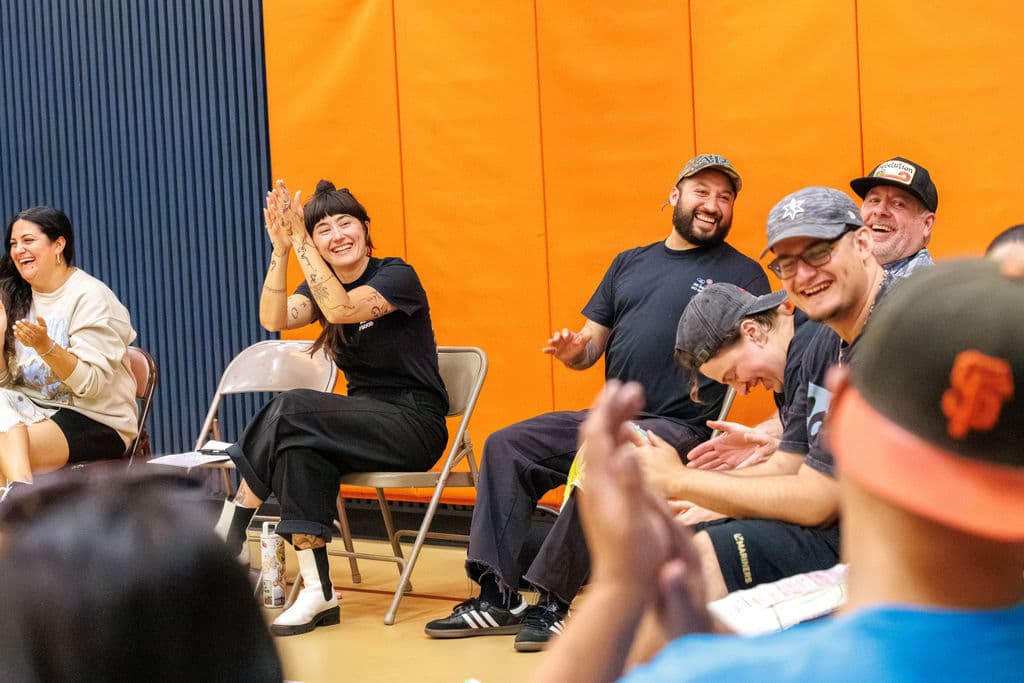
- We witnessed each other. All artworks were placed in the center of our circle as we took in the range of expression. Each person picked up one that they were drawn to (not their own) and we went around the circle, each person bragging about the artwork as if it was their own. This had an incredibly positive effect on the group. For one, people practiced speaking kindly about themselves, which was easier when it wasn't actually their own art. Two, the artist received affirmation and praise, anonymously, making it easier to receive. Three, the group knew this was happening behind the scenes, creating both a lighthearted and totally profound experience of witnessing one another.
- We integrated together. People got to share about their experience as the group listened. They reflected feeling a deeper sense of belonging, and more freedom. They shared about feeling inspired, empowered and more creative and connected to the group.
The Impact
Our goal was to give staff an embodied experience of the Bad Art Club methodology, so they left feeling more empowered and inspired to meet their clients with compassion and curiosity.
We achieved this goal because we invited the group to engage in novel ways through sound, movement and collective art-making, with full permission to lean all the way in, all the way out, or land somewhere in between. The agency to choose created safety in the room, and low-barrier invitations to “be bad” opened neural pathways for something new to emerge. We designed the training to meet the group where they were at and carry them through an arc into a more relaxed, present, joyful state of openness and connection, a container of belonging, creativity and freedom of expression that let staff get to know one another beyond their roles, and celebrate their power as a unified team.
By the end of the training, that showed up directly in the room: staff reflected a deeper sense of belonging and freedom, and described themselves as inspired, empowered, more creative and more connected to the group.
in their words
“Bad Art Club brought so much joy to the start of our school year. As school staff who support trauma-impacted youth, it is essential that we have moments together where we can embrace connection and belonging before offering both to our youth. Bad Art Club gave us just that.
From the start, Jules made the collaboration process seamless and I could tell it was important for her to fully understand the work our agency and school do for the youth. When it came time for the workshop, Jules constructed a meaningful professional development opportunity for our staff as we returned from our summer break.
It was engaging, insightful, meaningful, and overall fun! We can't wait to have Bad Art Club back!”
Bring this to your community.
Bad Art Club facilitates workshops for organizations, schools, and communities. Every session is custom-designed around your goals.
